Skip to content

June 2026

AI Agent Application Demo: Putting a Brain Inside Your App

Source code: github.com/pkhamdee/coffee-agent

For decades we've built applications the same way: write a function, call the next function, handle each case with an if statement. The logic is explicit, deterministic, and completely predictable — a flowchart carved into code.

That model has a hard ceiling. When a user says something ambiguous, changes their mind mid-conversation, or combines requests in ways you didn't anticipate, the rigid-logic app breaks down. You write more and more special-case handling until the code becomes unmaintainable.

AI agents flip this model. You give your application a reasoning engine — a brain — and let it figure out what to do. This post walks through a real, runnable example: Coffee Agent, a coffee shop ordering chatbot built with NestJS, React, LangGraph, and a local LLM on Ollama.

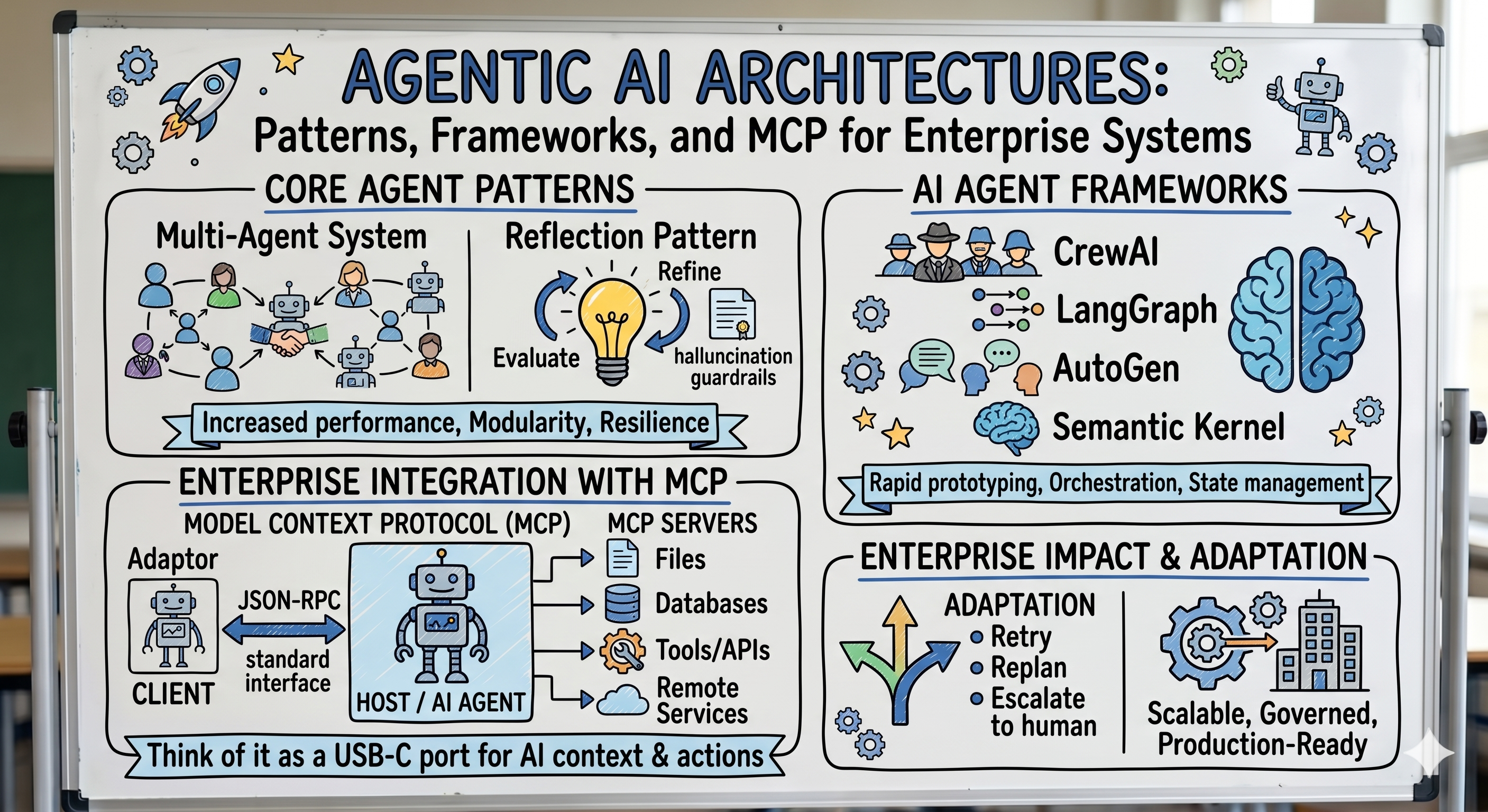
Agentic AI Architectures: Patterns, Frameworks, and MCP for Enterprise Systems

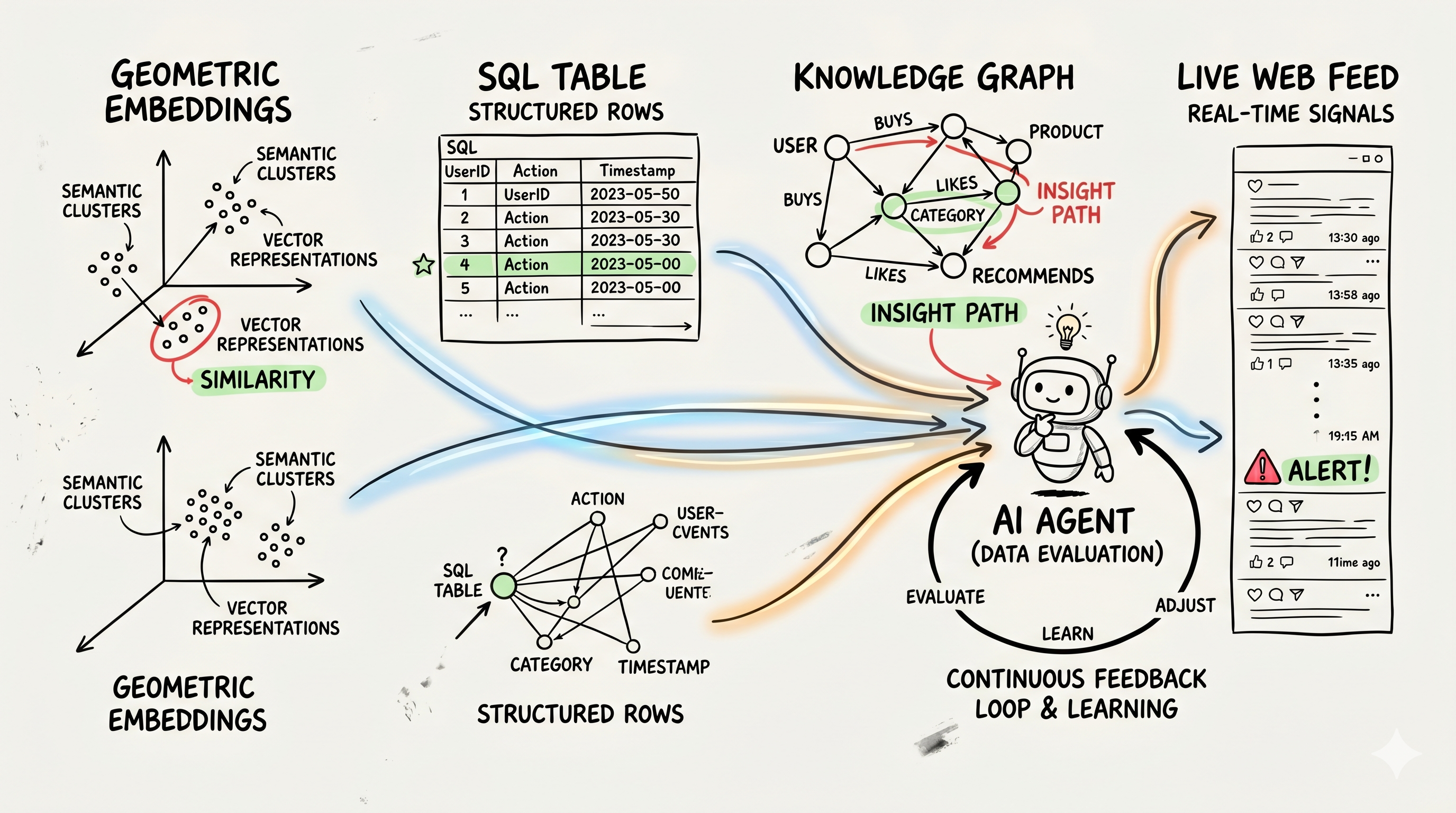
Most AI tutorials show you how to call an API and get a response. That's not an agent. An agent is a system that perceives, plans, acts, and adapts — autonomously — using tools, memory, and other agents to complete tasks that no single LLM call could handle.

In 2026, agentic AI is the dominant paradigm for building AI into enterprise software. Not chatbots. Not search bars with AI behind them. Full autonomous systems that can research a topic, write code, test it, file a ticket, notify a Slack channel, and self-correct when something goes wrong — without a human in the loop for every step.

This is the definitive guide. We cover every design pattern, every major framework, the Model Context Protocol that is quietly unifying the entire ecosystem, and how to wire all of it into production enterprise systems.

GPU for AI Explained: VRAM, CUDA Cores, Tensor Cores, and Everything In Between

You've heard it countless times: "You need a GPU to train AI models." But why? What is a GPU actually doing that a CPU can't? What are CUDA Cores, Tensor Cores, and VRAM — and why do AI engineers obsess over these numbers?

This guide starts from scratch and builds a complete mental model of GPU hardware for AI. By the end, you'll understand exactly what's happening inside the chip when your model trains — and how to pick the right hardware for the job.

Master Generative AI — Part 2: Working with LLMs

Part 2 of the Master Generative AI: A Step-by-Step Challenge series.

Series Map:


In Part 1 you built the conceptual foundation. Now we get our hands dirty. This part is where theory becomes practice — you'll write code that tokenizes text, queries embeddings, builds a RAG pipeline, and ships your first working chatbot.

MCP vs Tool Calling vs Skills: The Mental Model Every AI Builder Needs in 2026

You're building an AI agent. You've heard the terms thrown around — tool calling, MCP, skills — and nobody has given you a clean mental model for how they fit together. Are they competing approaches? Different names for the same thing? Should you pick one?

Here's the answer in one sentence: they are layers, not alternatives. Tool calling is the primitive. MCP is the protocol. Skills are the playbook. Production agents in 2026 use all three.

DevOps Project Example: From Code Push to Production with GitOps, FluxCD, and Kubernetes

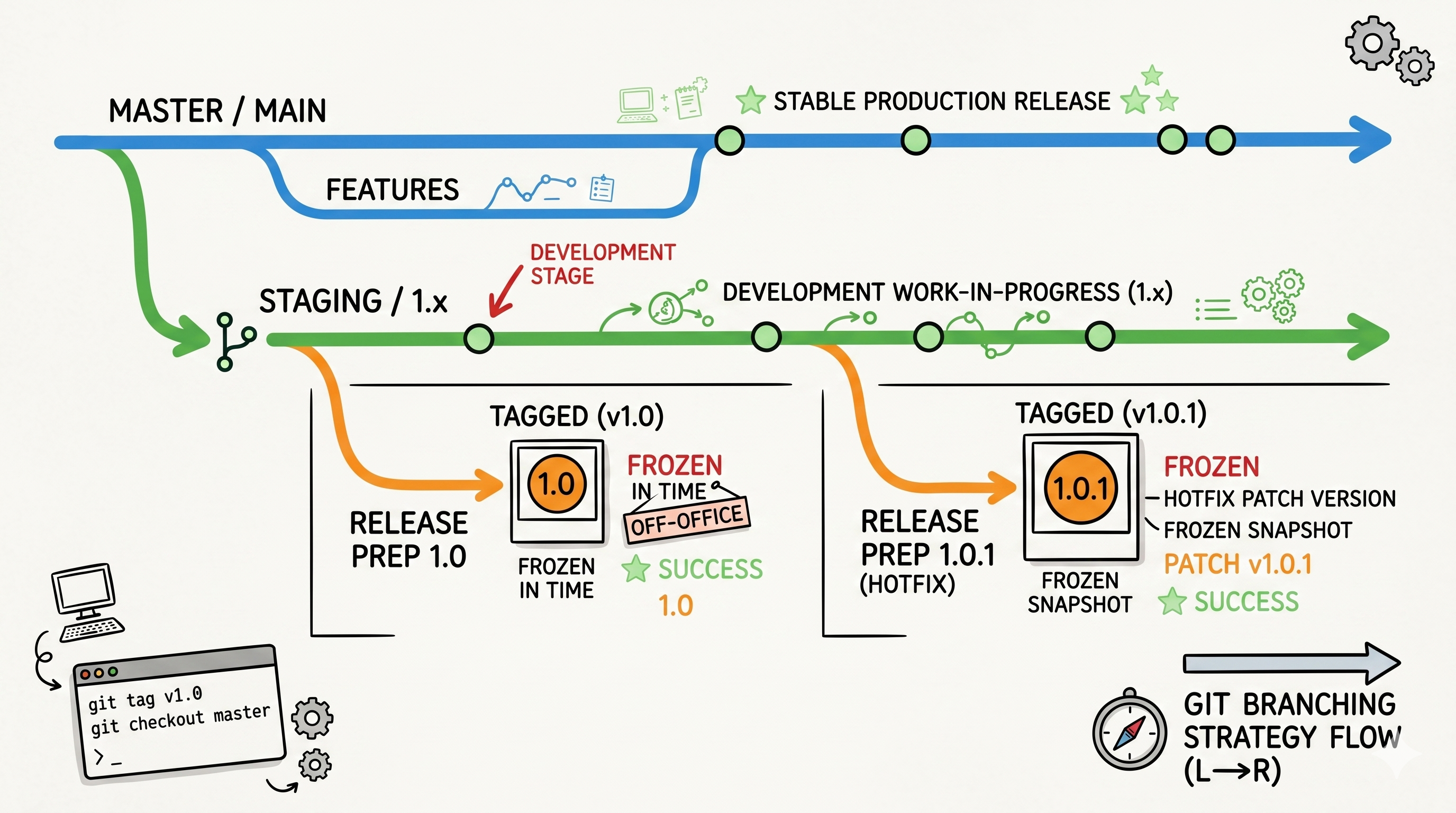
Most DevOps tutorials show you a pipeline diagram. This one shows you a real pipeline, built on a real application, running on real Kubernetes clusters — with every tool, every workflow, and every design decision explained.

This post walks through the complete CI/CD system behind Slotmachine — a real-time multiplayer tournament app — from the moment a developer pushes code to GitHub, through six security and quality gates, all the way to automated deployment on both Nutanix on-premise clusters and AWS EKS. No hand-waving. No "and then magic happens."

The full source code is available in two repositories:

Nutanix Cloud Platform Overview

Most enterprises still run their workloads on a tangle of separate systems — one vendor for compute, another for storage, another for networking, yet another for virtualization. Managing all of that is expensive, slow, and fragile. Nutanix was founded on one radical idea: collapse all of those layers into a single, software-defined platform that runs on commodity hardware and is as simple to operate as a public cloud.

In 2026, Nutanix Cloud Platform (NCP) has grown from that original idea into a comprehensive stack spanning private cloud infrastructure, multi-cloud management, enterprise Kubernetes, database-as-a-service, AI infrastructure, and unified storage — all managed through a single pane of glass.

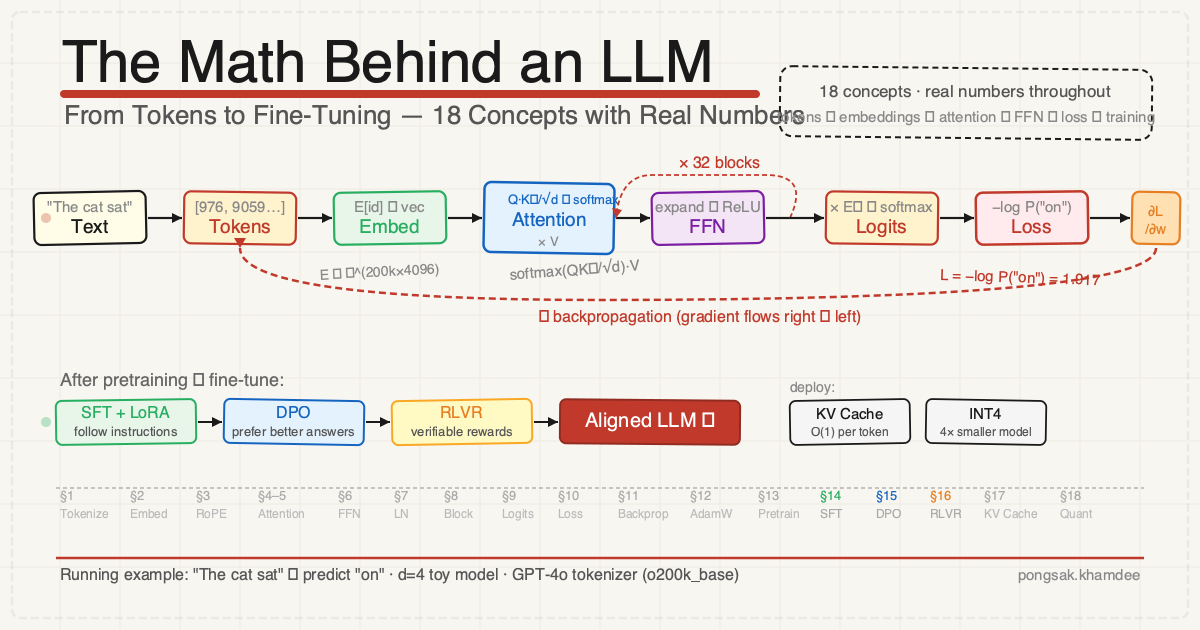
Building an LLM from Scratch in PyTorch: The Full Lifecycle Cheatsheet

Most LLM tutorials give you one of two things: a high-level diagram with boxes and arrows, or a 10,000-line codebase with no explanation of why each piece exists.

This post is neither. It's a step-by-step lifecycle — 8 phases, each with working PyTorch code, the reasoning behind every decision, and an explicit Do / Don't list that captures the mistakes that cost most beginners weeks of wasted compute.

By the end you'll have built, trained, modernised, scaled, and aligned a language model — the exact same lifecycle that produced every major LLM you've used.

Phase 1: Core Transformer    → the engine
Phase 2: Train a Tiny LLM    → prove the pipeline works
Phase 3: Modernise           → match 2026 architecture
Phase 4: Scale Efficiently   → push past toy datasets
Phase 5: Mixture of Experts  → conditional computation
Phase 6: SFT                 → turn autocomplete into an assistant
Phase 7: Reward Modelling    → teach the model what "good" looks like
Phase 8: RLHF                → optimise for human preference

Every snippet in this post has been executed end-to-end on Python 3.13 + PyTorch 2.12, CPU only — including the full 5,000-step Phase 2 training run. Where a verification test caught a bug in an earlier draft (the KV cache, the reward model head, the PPO log-prob gather), the fix is in the code below and the test that caught it is shown so you can run it on your own implementation.

Prerequisites: comfortable Python, basic tensor operations (view, transpose, broadcasting), and the chain rule. No prior transformer experience — that's what Phase 1 is for.

LLMs and the Transformer Architecture: A Beginner's Complete Guide

You've chatted with ChatGPT. You've asked Claude for help. You've seen GitHub Copilot finish your sentences. But have you ever wondered what is actually happening inside these systems? How does a computer — a machine that ultimately only understands 0s and 1s — produce text that reads like it was written by a thoughtful human?

This guide answers that question from the ground up. No PhD required. We'll start with an analogy a child could follow, then gradually build up to a precise technical understanding of the Transformer architecture that powers every major LLM today.

Master Generative AI — Part 1: Foundation of AI & Machine Learning

This is Part 1 of the Master Generative AI: A Step-by-Step Challenge series — a practical, no-fluff guide to going from complete beginner to confident AI practitioner in 2026.

Series Map:


The AI revolution isn't just for researchers anymore. In 2026, the tools, libraries, and models that used to require a PhD and a supercomputer are now accessible to any developer willing to invest a few weeks of focused learning. This series is your step-by-step map.

We start at the very beginning — not because you're not smart, but because the best practitioners always have the strongest foundations.